Active:
28 articles in User Research
Full ArticleUser Research
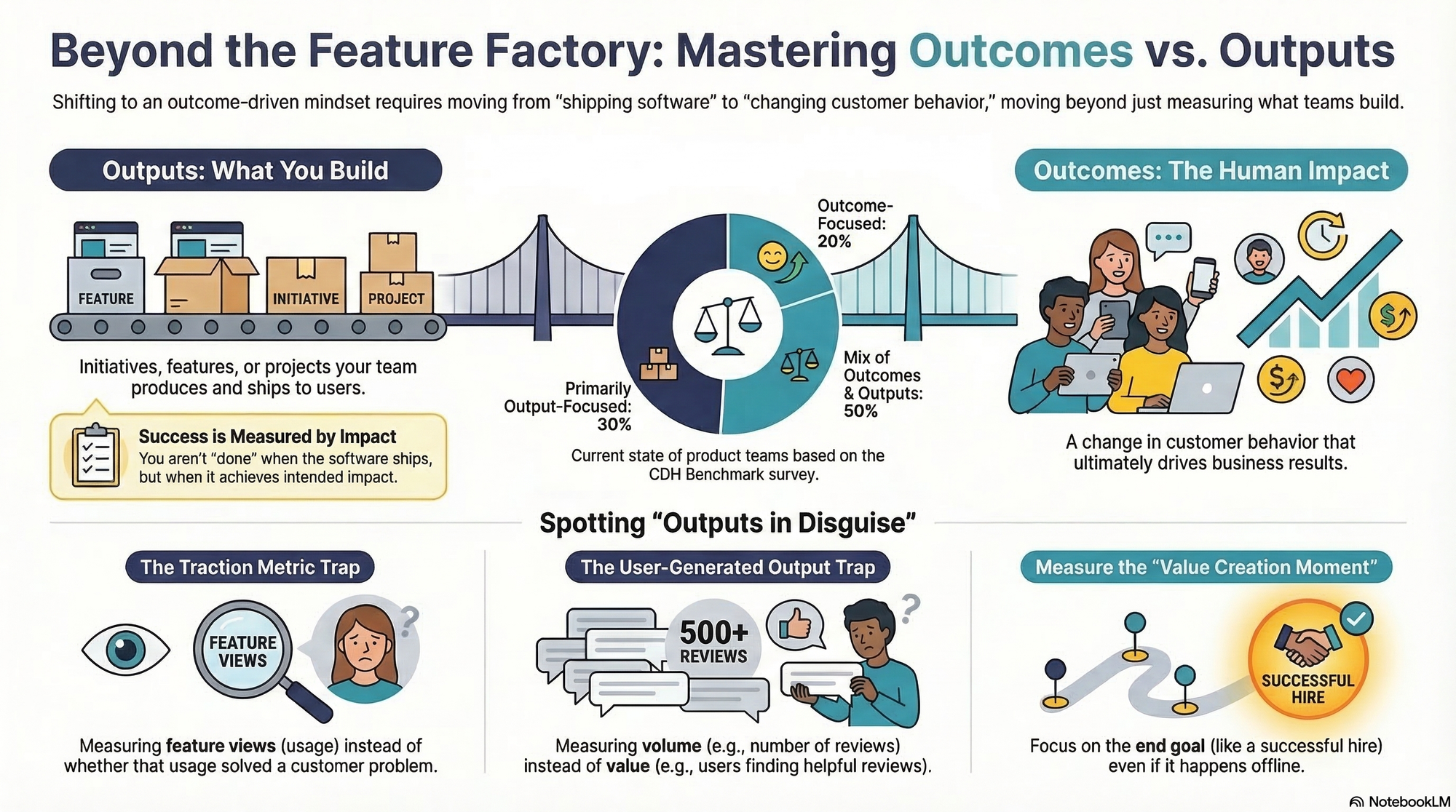
Outcomes vs. Outputs: What's the Difference and Why Does It Matter?
What's the difference between outcomes vs. outputs? Walk through clear-cut and tricky examples, common mistakes, and practical steps.
Product Talk (Teresa Torres)·11 min read·Mar 18, 2026
Full ArticleUser Research
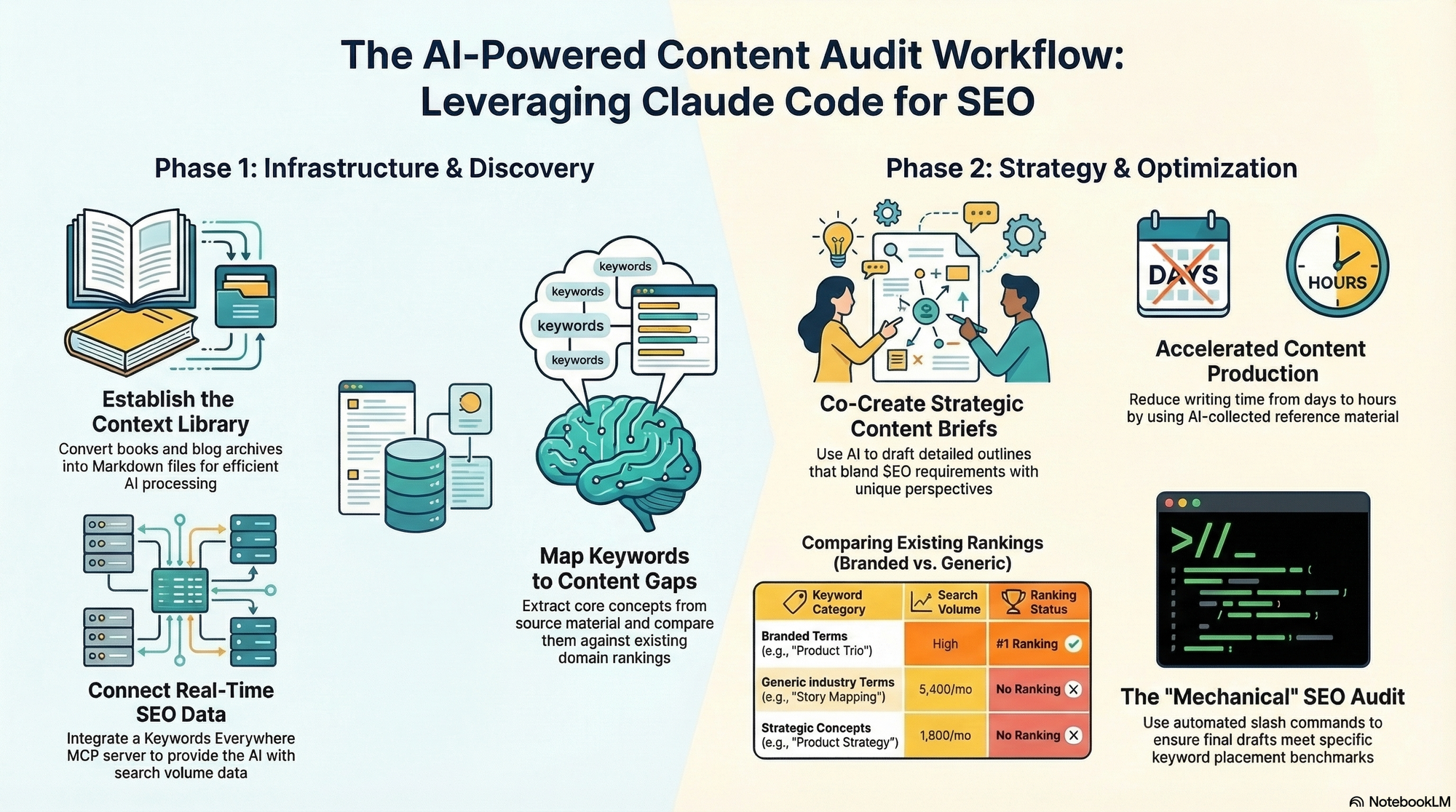
Conversations with Claude: Can You Conduct a Content Audit?
Audio Version ($)During one of our recent Claude Code Office Hours, a participant asked, "Can we zoom out? Help me understand what I can use Claude Code for."This is a great question. I was so focused on how to help people set up Claude Code that I
Product Talk (Teresa Torres)·5 min read·Mar 11, 2026

Full ArticleUser Research
Building AI Sales Reps: How ShowMe Orchestrates Voice, Video, and Multi-Agent Workflows to Close Deals
Listen to this episode on: Spotify | Apple PodcastsWhat happens when you treat an AI agent not as a chatbot, but as a full teammate on your sales team – one that can jump on video calls, demo your product, make phone calls, and follow up over days?In this
Product Talk (Teresa Torres)·3 min read·Feb 19, 2026
Full ArticleUser Research
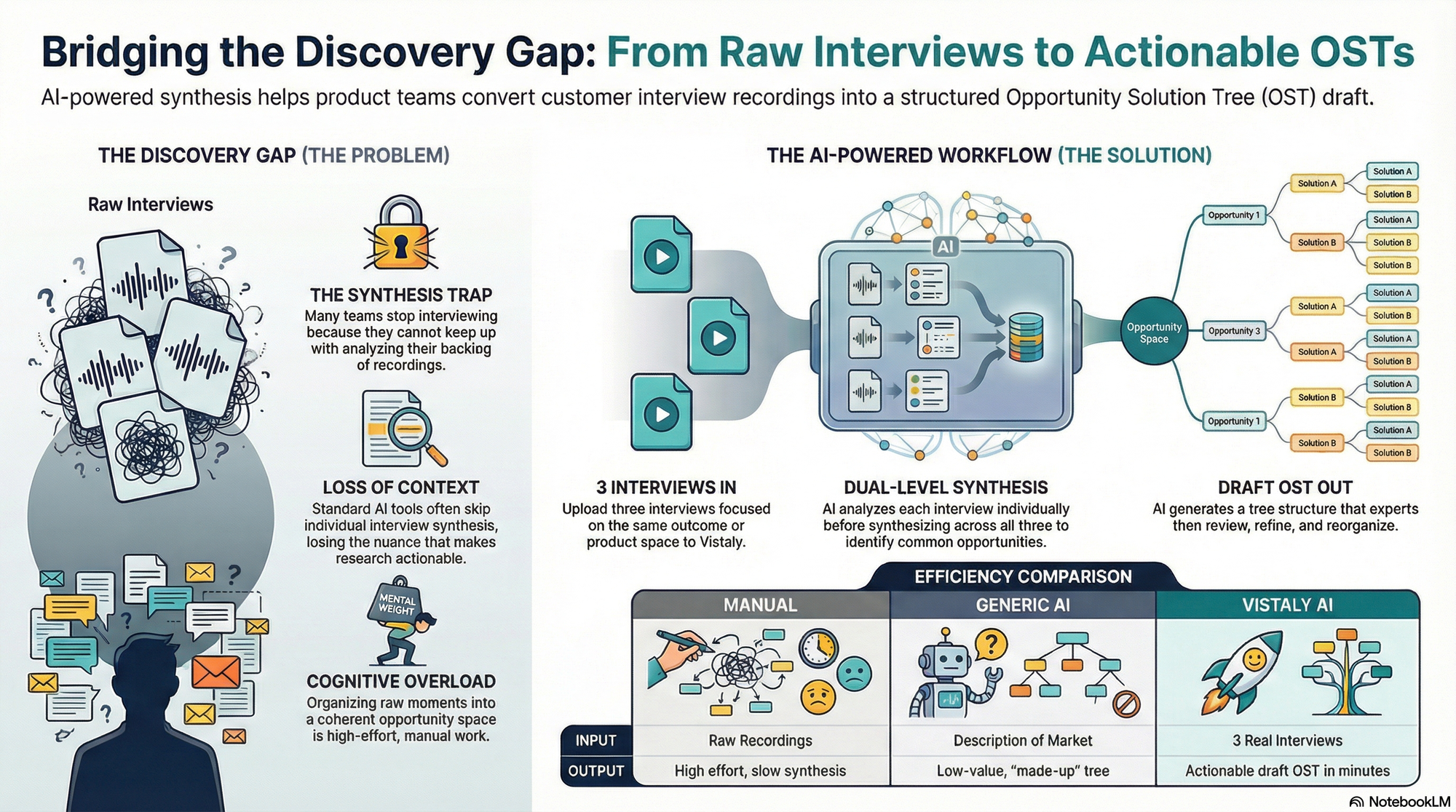
From Customer Interviews to an Opportunity Solution Tree—In Minutes
Most product teams know they should be interviewing customers. And more teams than ever are actually doing it. That's the good news.The bad news? Many teams are struggling with what comes next.I've written before about the challenge of interview synthesis—going from a
Product Talk (Teresa Torres)·5 min read·Feb 18, 2026

Full ArticleUser Research
Your Design System Needs an Enforcer
Although design systems promise consistency, most still fail without someone actively enforcing the rules and making teams follow them.
Nielsen Norman Group·7 min read·Feb 6, 2026
Full ArticleUser Research
AI-Moderated Interviews: If, When, and How to Use Them
AI interviews offer faster feedback at scale, but they're not a replacement for in-depth, human-led semistructured interviews.
Nielsen Norman Group·20 min read·Jan 30, 2026
Full ArticleUser Research
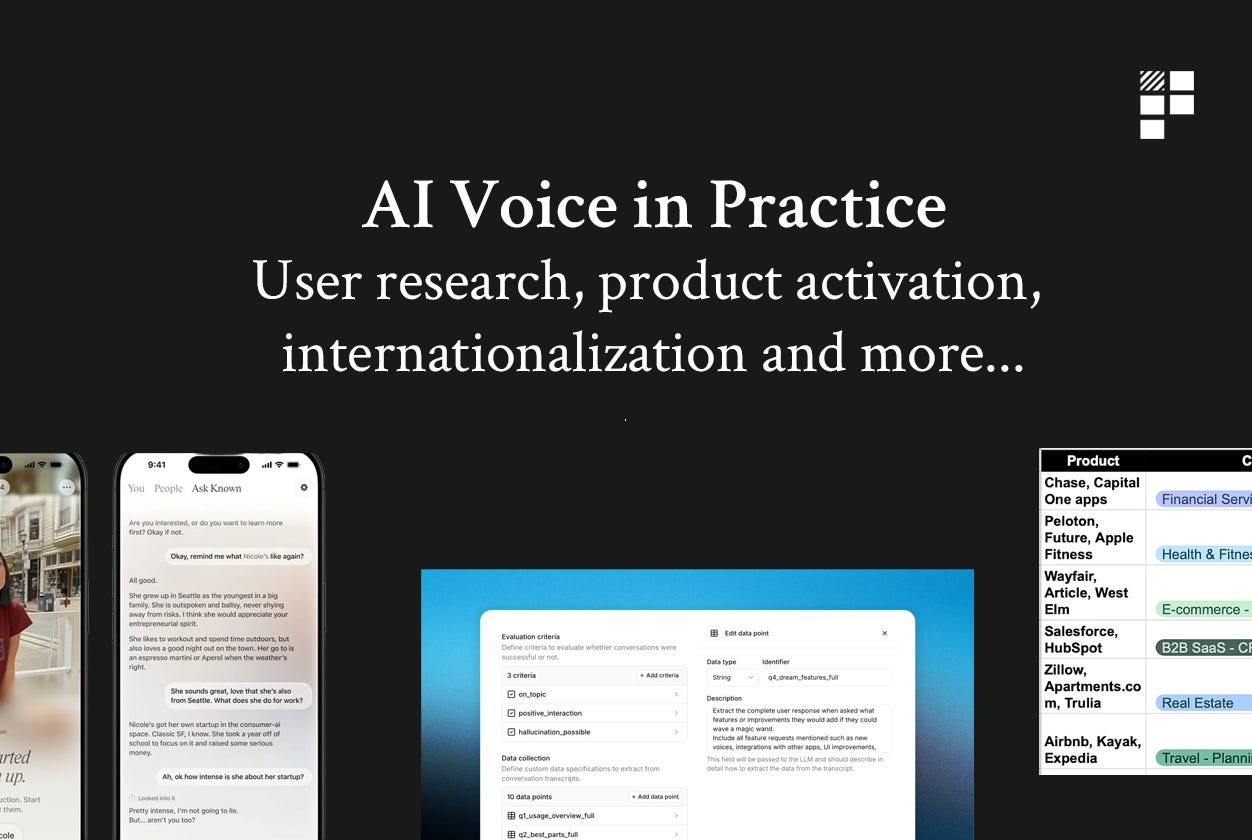
Deep: How ElevenLabs built an AI User Research Voice Agent
AI Voice in Practice: How voice AI is transforming product activation flows, demos, user research, internationalization and more. Examples from world leading companies.
Department of Product·4 min read·Jan 26, 2026
Full ArticleUser Research
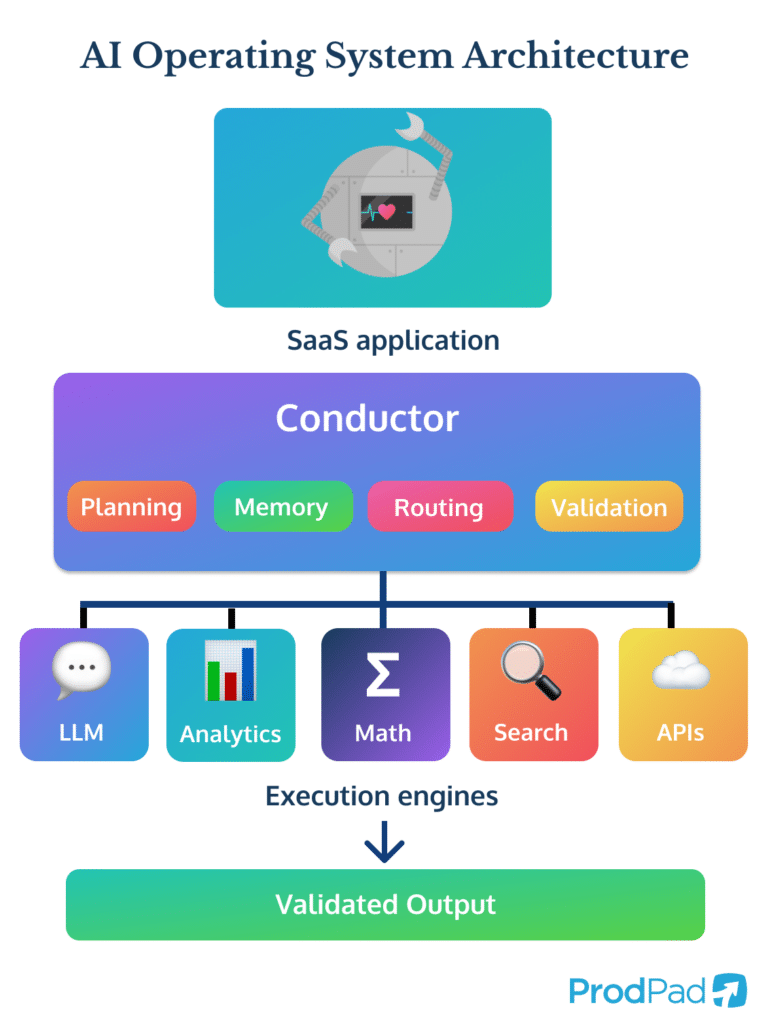
The AI OS: Why Orchestration is Becoming the Real Foundation of Practical AI
When the shine wore off the models When we began building ProdPad CoPilot, I wanted to create the strongest AI system a product team could rely on. Not a novelty, The post The AI OS: Why Orchestration is Becoming the Real Foundation of Practical AI appeared first on ProdPad.
ProdPad·7 min read·Dec 10, 2025
Full ArticleUser Research
Ethnographic Research in Product Development: Observing Users in Context
Ethnographic research — observing users in their natural environment — reveals insights that no survey or interview can capture. Borrowed from anthropology, ethnographic methods help product teams discover unarticulated needs, workarounds, and contextual factors that shape how products are actually used. This article covers field observation techniques, contextual inquiry, photo and video ethnography, and cultural probes. It provides practical guidance on planning ethnographic studies, managing the tension between observation and interpretation, and translating findings into design implications.
Interaction Design Foundation·13 min read·Jan 1, 2023
Full ArticleUser Research
Qualitative vs. Quantitative Research: Choosing the Right Approach
The debate between qualitative and quantitative research is a false dichotomy — the best researchers use both, strategically. This article explains when each approach is most valuable: qualitative research (interviews, observations, diary studies) for exploring 'why' and generating hypotheses; quantitative research (surveys, A/B tests, analytics) for testing hypotheses and measuring 'how much.' It provides a decision framework for choosing methods based on research questions, maturity of understanding, and available resources, with practical examples from product development and UX research.
Nielsen Norman Group·10 min read·Jan 1, 2023
Full ArticleUser Research
Google's HEART Framework: How to Conduct User Research at Scale
Google's HEART framework (Happiness, Engagement, Adoption, Retention, Task success) provides a systematic approach to measuring user experience at scale. This case study explains how Google Research developed the framework, how teams across the company apply it, and how it bridges the gap between qualitative insights and quantitative metrics.
Nielsen Norman Group·13 min read·Jan 1, 2023
Full ArticleUser Research
How GOV.UK Transformed Government Digital Services Through User-Centered Design
The UK Government Digital Service (GDS) replaced thousands of government websites with a single, user-centered platform. This case study examines how the team applied agile methods, rigorous usability testing, and radical content simplification to create GOV.UK, setting a global standard for digital government services.
A List Apart·16 min read·Jan 1, 2023
Full ArticleUser Research
The Mom Test: How to Talk to Customers Without Lying to Yourself
Practical techniques for getting honest, useful feedback from customer conversations — avoiding the trap of asking leading questions that tell you what you want to hear.
Classic Articles·8 min read·Jan 1, 2023
Full ArticleUser Research
User Interviews Done Right: Techniques for Uncovering Real Insights
User interviews are the backbone of qualitative research, but most are conducted poorly — leading to confirmation bias, social desirability effects, and superficial insights. This article covers the complete interview process: recruitment and screening, writing a discussion guide, mastering probe questions, active listening techniques, and synthesizing findings. Key techniques include the 'five whys' for depth, critical incident technique for specificity, and the 'mom test' principle of asking about behavior rather than opinions. It includes a template discussion guide and common interview anti-patterns to avoid.
Nielsen Norman Group·14 min read·Jan 1, 2023
Full ArticleUser Research
The Art and Science of Survey Design: Getting Reliable Data from Questions
Surveys are the most widely used — and most widely abused — research instrument in business. Poorly designed surveys produce misleading data that can drive costly decisions. This article covers the principles of rigorous survey design: writing unbiased questions, choosing appropriate scales, avoiding leading and double-barreled questions, managing survey length, and sampling strategies. It also covers analysis techniques including how to handle response bias, calculate confidence intervals, and distinguish meaningful differences from noise.
Nielsen Norman Group·12 min read·Jan 1, 2023
Full ArticleUser Research
How Airbnb Redesigned Its Search Experience to Drive Bookings and Trust
Airbnb's 2022 search redesign replaced traditional location-based search with flexible, category-driven exploration. This case study details how months of user research revealed that travelers were increasingly open to new destinations, leading to the Categories and Split Stays features that fundamentally changed how people discover places to stay.
Nielsen Norman Group·15 min read·Jan 1, 2023
Full ArticleUser Research
IDEO's Human-Centered Design Process: Methods Behind the World's Most Influential Design Firm
IDEO popularized human-centered design and design thinking across industries worldwide. This case study traces the evolution of IDEO's methodology from early projects like the Apple Mouse to modern challenges in healthcare and education, examining the inspiration-ideation-implementation framework that has been adopted by organizations globally.
Interaction Design Foundation·17 min read·Jan 1, 2023
Full ArticleUser Research
How Uber Designs Products for Global Markets: Localization at Scale
Uber operates in over 70 countries with dramatically different transportation cultures, payment systems, and user expectations. This case study examines how Uber's design team conducts field research in diverse markets, adapts the rider and driver experience for local contexts, and maintains a cohesive global product while respecting regional differences.
Smashing Magazine·14 min read·Jan 1, 2023
Full ArticleUser Research
Continuous Discovery Habits: How to Discover Products That Create Customer Value
Teresa Torres' framework for making product discovery a continuous practice rather than a one-time event. The Opportunity Solution Tree maps desired outcomes to opportunities (customer needs) to solutions to experiments. Key habit: weekly customer interviews. Covers assumption mapping, experiment design, and comparing solutions. Rapidly becoming required PM reading.
SVPG (Marty Cagan)·14 min read·May 1, 2021
Full ArticleUser Research
Empathy in Business: The Competitive Advantage of Understanding Others
Empathy is not a fixed trait but a skill that can be developed, and organizations that cultivate it outperform competitors on innovation, engagement, and customer satisfaction. Zaki's research distinguishes between cognitive empathy (understanding perspectives), emotional empathy (sharing feelings), and compassionate empathy (being moved to help). The article shows how leaders can build empathic cultures through modeling, hiring practices, and structural changes that create exposure to diverse perspectives.
Harvard Business Review·11 min read·Dec 7, 2020